

If you're a landlord looking for the best flooring for rental properties, let me cut to the chase: Luxury Vinyl Plank (LVP) is the hands-down winner for most situations. After years in this business, I can tell you its blend of durability, 100% waterproof construction, and modern looks provides the best long-term value and minimizes those dreaded turnover headaches. LVP is simply a smart, reliable investment for just about any rental unit.
Choosing the Right Flooring for Your Rental Property
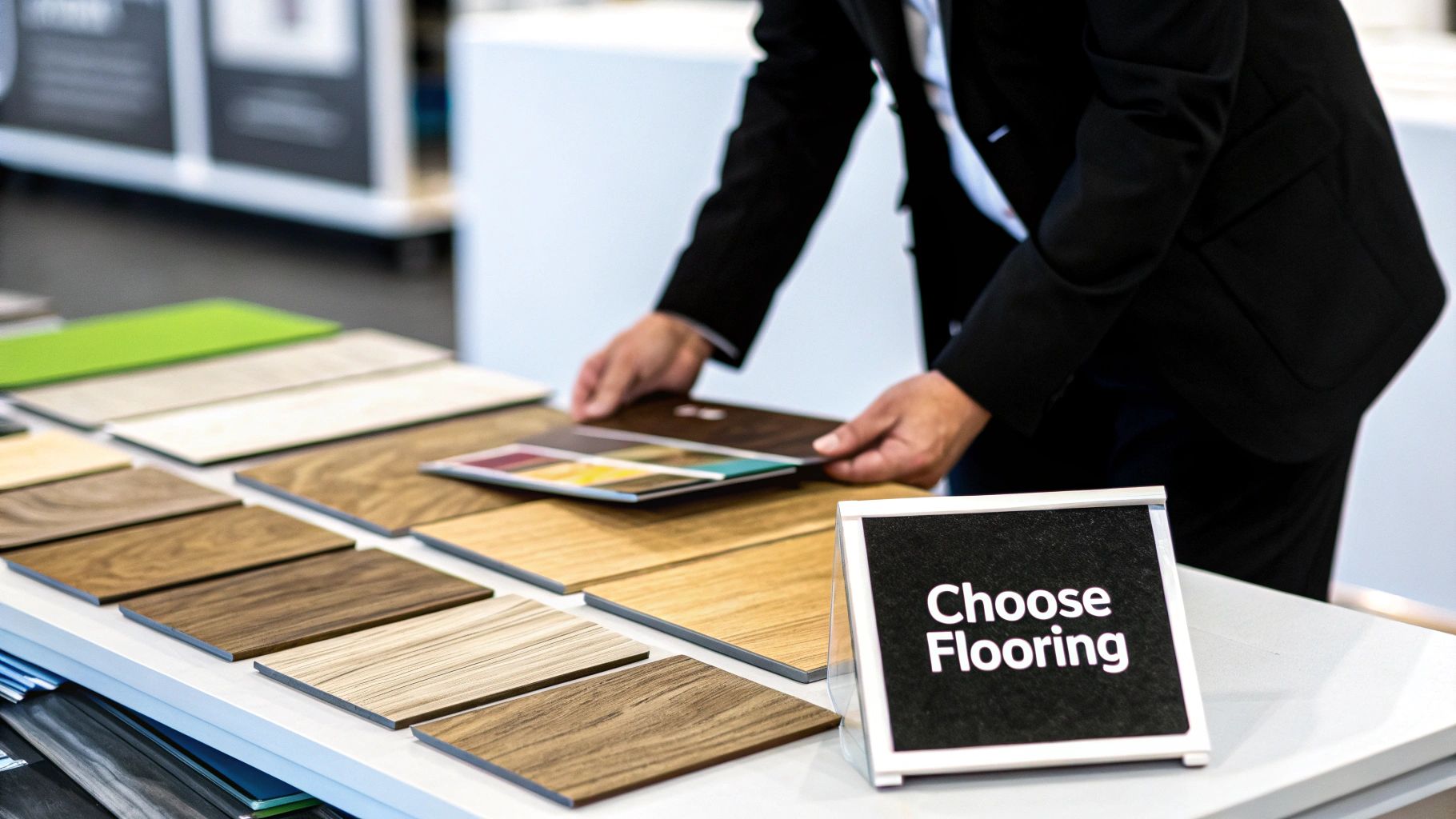
Picking the right flooring isn't just about making the place look good; it's a core financial decision that directly impacts your bottom line. The perfect choice keeps repair costs down, brings in high-quality tenants, and makes the turnover process a breeze.
Get it right, and you’re looking at fewer maintenance calls, lower long-term expenses, and a more resilient asset. Get it wrong, and you're stuck with constant replacements and damage that eats right into your returns.
Core Decision-Making Factors for Landlords
To make the right call, you have to think like a property owner, not a homeowner. Don't just look at the upfront cost—you need to consider the total lifecycle value. This means weighing a few critical factors to find the best fit for your specific property and the tenants you want to attract.
Here's what I always consider:
- Total Lifecycle Cost: This isn’t just the price tag. It's the initial purchase and installation cost combined with the expected lifespan and ongoing maintenance. A cheaper floor that needs replacing every five years will cost you way more than a durable one lasting fifteen.
- Durability and Maintenance: Your flooring has to survive tenant wear and tear with as little intervention as possible. You need something that's easy to clean, scratch-resistant, and waterproof. This ties directly into your overall landlord responsibilities for repairs, because tough materials mean fewer things to fix.
- Tenant Appeal: Let's be honest, modern, clean flooring is a huge draw for good tenants. The right look can help your property rent faster and often for a higher price, which is great for your cash flow.
- Water and Pet Resistance: Spills, leaks, and pets are just part of the rental game. You need flooring that can handle moisture and stand up to claws and accidents to protect your subfloor and avoid a world of costly pain.
Comparing Key Flooring Attributes
When you’re thinking about long-term costs, you have to factor in maintenance schedules. For example, knowing how often to refinish hardwood floors is crucial for understanding their true cost over the life of your investment.
To make it easier, here's a quick side-by-side look at how the top flooring options perform on the things that matter most to landlords.
| Feature | Luxury Vinyl Plank (LVP) | Laminate | Tile (Porcelain/Ceramic) |
|---|---|---|---|
| Water Resistance | 100% Waterproof | Water-Resistant | 100% Waterproof |
| Durability | Excellent | Good | Exceptional |
| Upfront Cost | Moderate | Low | High |
| Typical Lifespan | 15-25 Years | 10-20 Years | 20+ Years |
A Quick Look at the Top Flooring Options for Landlords
Choosing the right flooring for a rental isn't just about looks—it's about finding the perfect balance of cost, durability, and tenant appeal. Before we get into the nitty-gritty comparisons, let's do a quick fly-by of the most common choices.
Think of this as your shortlist. Each one of these materials has a place in a landlord's playbook, whether you're trying to pinch pennies on a turnover or outfit a high-end unit with something indestructible.
Luxury Vinyl Plank: The All-Around Champion
There's a reason LVP has become the darling of the rental world. It gives you that gorgeous, high-end hardwood look but has the toughness of a heavyweight champion. LVP is built with a rugged wear layer that just shrugs off the scratches and scuffs that come with tenant life.
But its real superpower? It's 100% waterproof. Not just "water-resistant." This is a game-changer for kitchens, bathrooms, and basements, saving you from the nightmare of subfloor water damage. For a versatile, attractive, and nearly foolproof option that works anywhere, LVP is tough to argue with.
Laminate: The Budget-Friendly Lookalike
When you absolutely need the look of wood but your budget is screaming "no," laminate is your answer. Modern laminate is shockingly realistic, with visuals and textures that can fool even discerning eyes. It’s a solid pick for living rooms and bedrooms where you want that upscale vibe without the matching price tag.
The catch is its core, which is usually a wood composite. That means it’s vulnerable to moisture. While most modern laminates have some water resistance, they are not truly waterproof. So, it's a strategic play for the dry areas of a rental but a gamble in bathrooms or kitchens.
Porcelain and Ceramic Tile: The Durability Powerhouse
For the high-traffic, high-moisture war zones in a rental, nothing beats tile. Porcelain and ceramic are virtually indestructible—they laugh at scratches, dents, and water. A properly installed tile floor can easily outlast you, making it a "set it and forget it" investment for bathrooms, kitchens, and entryways.
Tile has the lowest long-term maintenance cost of any flooring. The initial install hits the wallet harder, but its sheer longevity and damage resistance often deliver a much better ROI over the property's lifetime.
The downsides are real, though. It's more expensive upfront and feels cold and hard underfoot. And while the tiles are waterproof, the grout lines need to be sealed to keep them from getting grimy, which is one small maintenance task to remember.
Niche Options for Specific Rentals
Beyond the big three, a couple of other players are worth knowing for the right situation:
- Engineered Hardwood: Reserve this for your Class A or luxury rentals where tenants expect the real deal. It’s more stable than solid hardwood but is still prone to scratches and water damage, making it a high-maintenance choice for most landlords.
- Carpet: It's definitely fallen out of style for main living areas, but carpet still makes a lot of sense for bedrooms. It adds a layer of warmth, comfort, and sound dampening that tenants appreciate. Just make sure to choose a low-pile, stain-resistant variety to make cleaning and longevity less of a headache.
Comparing The Best Rental Flooring Materials
Choosing the right flooring for a rental isn't just about what looks nice—it's a business decision. You're balancing the upfront cost against long-term durability and the headaches of maintenance. This is where the real battle between top contenders like LVP, laminate, and tile begins.
We're going to put these materials head-to-head, looking at how they stand up to the tough reality of rental life. Forget generic pro/con lists; let's talk about what happens when tenants, pets, and water enter the picture.
Durability And Resistance To Tenant Wear
The golden rule for rental flooring? It has to be tough. Tenants are hard on floors—moving furniture, dropping heavy items, and just general wear that you wouldn't see in your own home. Your flooring choice is your first line of defense against constant repairs and early replacement.
Luxury Vinyl Plank (LVP) is a true workhorse in this arena. Its commercial-grade wear layer is engineered to take a beating, resisting scratches, scuffs, and dents from daily life. This makes it a fantastic pick for high-traffic units or those with kids and pets. For most rentals, look for an AC rating of AC3 or higher.
Laminate flooring is also pretty tough on the surface, with a hard top layer that fights off scratches. The catch is its core, which is usually a high-density fiberboard. A heavy dropped object, like a cast-iron pan, can chip it. While it handles foot traffic just fine, it lacks the bounce-back resilience of LVP.
Key Differentiator: Both LVP and laminate are scratch-resistant, but LVP's flexible vinyl core gives it a huge advantage against impacts. It’s far less likely to chip or crack when something heavy is dropped—a common reality in any rental.
Porcelain and ceramic tile are in a class of their own when it comes to raw durability. It's almost impossible to scratch a quality porcelain tile. This makes it the undisputed champion for entryways, kitchens, and bathrooms where grit, water, and heavy use are the norm. Tile's only real weak spot is the grout, which can stain or crack over time if not properly maintained.
This decision tree helps visualize how to pick a material based on your top priority, whether that's durability, budget, or moisture resistance.
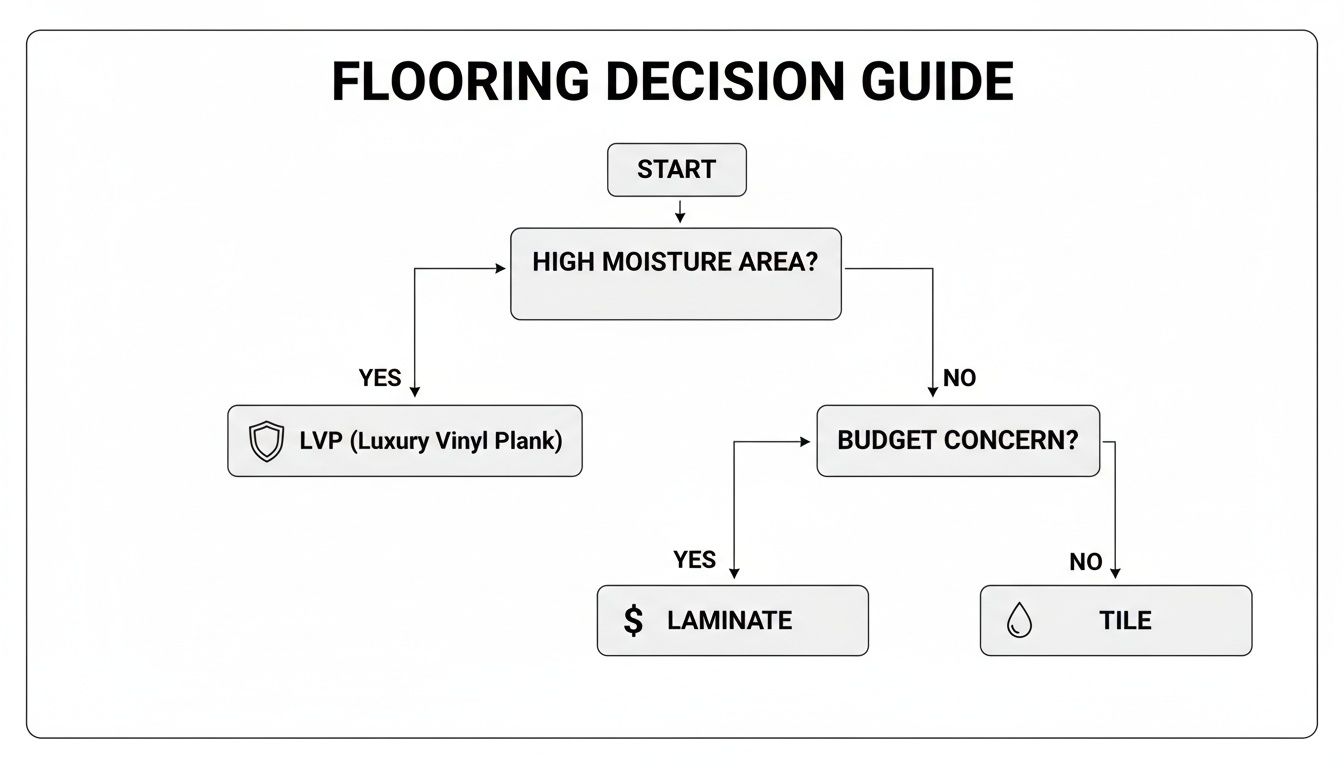
The flowchart makes it clear: LVP is the resilient all-rounder, laminate wins on initial cost, and tile is the king of waterproof solutions.
A Full Lifecycle Cost Analysis
The cheapest floor today might be the most expensive one tomorrow. A smart landlord looks at the total cost: installation, maintenance, repairs, and how many years you'll get out of it before it needs to be ripped out. That’s how you measure the true return on your investment.
Laminate usually has the lowest upfront material cost, making it tempting for landlords watching every penny. Installation is also cheap, especially if you can DIY the click-lock system. The downside is its shorter lifespan and zero tolerance for water, which could mean a full replacement much sooner than you'd like.
LVP sits comfortably in the middle of the price range. It costs more than laminate but less than good tile. Installation is just as simple, keeping labor costs low. And here's a huge plus: if a plank gets damaged, you can often replace just that one piece, saving you a fortune on repairs.
Tile has the highest upfront cost, thanks to both the material and the professional labor required to install it correctly. But with a lifespan that can easily exceed 20+ years and almost no maintenance, its total cost of ownership is often the lowest over the long haul.
Understanding these numbers is key to managing your property effectively. It's smart to see how flooring fits into your overall rental property maintenance costs, as it's just one part of a much bigger financial picture.
Performance Against Water, Pets, And Spills
Water is the ultimate enemy of rental properties. A leaky dishwasher, an overflowing tub, or a simple forgotten spill can cause thousands in subfloor damage. This is where "water-resistant" and "waterproof" are two very different things.
LVP is 100% waterproof. Its solid polymer core simply doesn't care about water. It won't swell, buckle, or fall apart, even if it's completely submerged. This makes it the safest and most reliable flooring for kitchens, bathrooms, laundry rooms, and basements. No contest.
Laminate, however, is only water-resistant. Its fiberboard core acts like a sponge if water gets between the seams, causing it to swell and bubble up permanently. Even the best laminates with 24 or 72-hour protection can't handle a real leak. Putting it in a wet area is a gamble.
Tile is also 100% waterproof. The ceramic or porcelain itself is impervious to moisture. The only potential vulnerability is the porous grout lines, but using a quality epoxy grout or a good sealer closes that door completely, creating a bulletproof, watertight surface.
To make things even clearer, let's put our top flooring options head-to-head in a simple comparison.
Rental Flooring Head-to-Head Comparison
This table breaks down the essential details every landlord needs to know, comparing our top four contenders across the most important metrics for a rental property.
| Flooring Type | Average Cost (per sq. ft.) | Durability Rating (1-5) | Water Resistance | Best For |
|---|---|---|---|---|
| Luxury Vinyl Plank | $2 – $7 | 4.5 | Waterproof | All-around use in any room, especially kitchens & baths. |
| Laminate | $1 – $5 | 3.5 | Water-Resistant | Budget-conscious living rooms, bedrooms, and hallways. |
| Porcelain/Ceramic Tile | $2 – $15 | 5.0 | Waterproof | High-traffic, high-moisture areas like bathrooms & entries. |
| Engineered Hardwood | $4 – $12 | 3.0 | Low | High-end rentals where aesthetic is the top priority. |
This at-a-glance view shows why LVP has become such a landlord favorite: it hits the sweet spot of cost, durability, and water protection.
For pet-friendly rentals, LVP and tile are the clear winners. Their non-porous surfaces don't trap odors or dander and are a breeze to clean after accidents. More importantly, their tough wear layers stand up to claws. Laminate's surface is scratch-resistant, but one pet accident that seeps into the seams can cause permanent swelling and odors, forcing a full replacement. It’s a risk many landlords are no longer willing to take.
Why Luxury Vinyl Plank Is the Smartest Investment
While every flooring type has its moment, Luxury Vinyl Plank (LVP) has rightfully claimed the top spot for landlords who know what they're doing. Its explosion in popularity isn't just some fleeting trend; it’s a direct answer to the real-world headaches that come with managing rentals. LVP simply brings a knockout combination of toughness, great looks, and long-term value that other materials can't touch.
This stuff is engineered to survive rental life. It’s got a commercial-grade wear layer that shrugs off the inevitable scratches, scuffs, and dropped objects that are part of the deal with tenant turnover. Unlike laminate or hardwood, LVP is built with a little give to it, meaning it absorbs impacts instead of chipping or cracking—saving you a fortune in repairs down the line.
Unbeatable Protection Against Water Damage
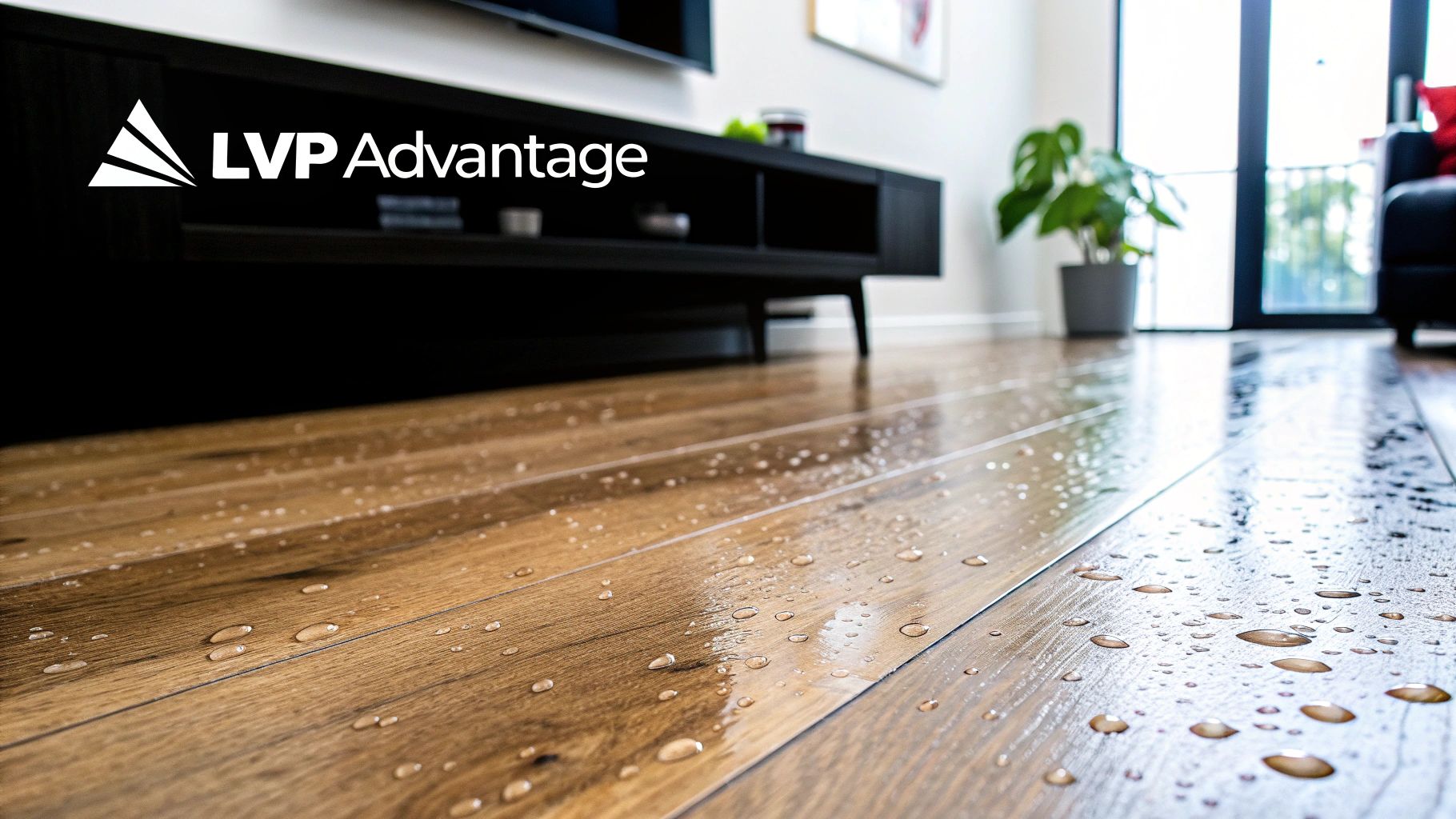
Here’s the game-changer: LVP is 100% waterproof. That isn't just marketing hype; the core of these planks will not swell, buckle, or fall apart when they get wet. This one feature alone makes it the absolute best flooring for rental properties, especially in kitchens, bathrooms, and basements where water is a constant threat.
Think about a classic landlord nightmare: a tenant's dishwasher springs a leak overnight. With laminate or engineered hardwood, you're looking at a disaster—thousands in subfloor repairs and a full flooring replacement. With LVP, that water just sits on top until you can wipe it up, with zero damage to the floor or the structure underneath.
LVP's waterproof construction is like an insurance policy against the most common and costly property damage. It protects your investment and prevents those catastrophic repair bills that can sink your profits.
That kind of resilience gives landlords incredible peace of mind. You can rest easy knowing your asset is protected from the one thing that can destroy a property faster than anything else: water.
High-End Looks and Low-Effort Maintenance
Modern LVP looks stunningly realistic. It mimics the grain of natural wood or the texture of stone so well that most people can't tell the difference. This high-end look helps attract better tenants and can even let you bump up the rent, directly improving your property's bottom line. The best part? You get that premium aesthetic with almost no work.
A quick sweep and the occasional mop are all it takes to keep LVP looking brand new, which makes your life a whole lot easier during turnovers. For rental properties, LVP just hits the sweet spot of affordability, durability, and easy maintenance. Landlords are flocking to it because installation can be 50-70% cheaper than real wood, and its scratch-resistant surface can easily last 10-20 years of tenant traffic.
Even better, properties with LVP see 25-30% fewer maintenance calls compared to units with carpet, which puts more money directly back into your pocket. To get a better sense of how upgrades like this can boost your property’s value, take a look at our guide on the best home renovations for resale.
Is Laminate Flooring Still a Smart Move?
While luxury vinyl plank (LVP) seems to get all the attention these days, don't count laminate flooring out just yet. It's still a powerful and budget-friendly workhorse for landlords, especially when you need that modern, hardwood look without the hefty price tag. For property owners managing tight budgets, it’s a seriously strategic choice.
Laminate's biggest selling point has always been its incredibly tough wear layer. It’s built to take a beating from dragged furniture, pet claws, and heavy foot traffic. That durability, paired with its lower cost, makes it a go-to option when you're looking to renovate multiple units at once without breaking the bank.
Getting the Most Bang for Your Buck
Laminate really shines in dry, moderate-traffic areas. Think living rooms, hallways, and bedrooms. Its click-lock installation system is also a huge bonus for handy landlords—a DIY install can slash your turnover costs and get a unit rented out again that much faster. If you want to get into the nitty-gritty, there are great resources on understanding laminate flooring installation, maintenance, cleaning, and cost.
From a numbers perspective, laminate delivers. With wear ratings from AC3 to AC5, it can handle over 10,000 footfalls a month in a busy rental while costing 30-50% less than real oak or maple. That’s a massive saving that allows you to upgrade more properties. What’s more, data from a laminate flooring market report suggests that units with modern laminate see 15-20% higher tenant retention, simply because of the clean, updated feel.
Know Its Achilles' Heel: Water
Here’s the catch, and it's a big one: water. The core of a laminate plank is usually high-density fiberboard, which acts like a sponge. If water gets into the seams from a spill or leak, it will swell, bubble, and warp. Game over.
This makes laminate a hard "no" for bathrooms, kitchens, laundry rooms, or basements. Any space where moisture is a given is the wrong place for this material.
Think of laminate as a specialist, not a generalist. It’s not an all-purpose floor like LVP, but a strategic tool for upgrading specific rooms on a tight budget. Use it right, and you get a premium look where it counts most, without overspending.
Understanding this one limitation is the key to using laminate successfully. It’s not an inferior choice; it's a specialized one. By installing it only in the right rooms, you play to its strengths—affordability, looks, and scratch resistance—while completely avoiding its fatal flaw. It’s a calculated move that delivers a high-quality finish for your tenants while keeping your renovation budget in check for the best possible ROI.
When to Go All-In on Tile for Unbeatable Durability
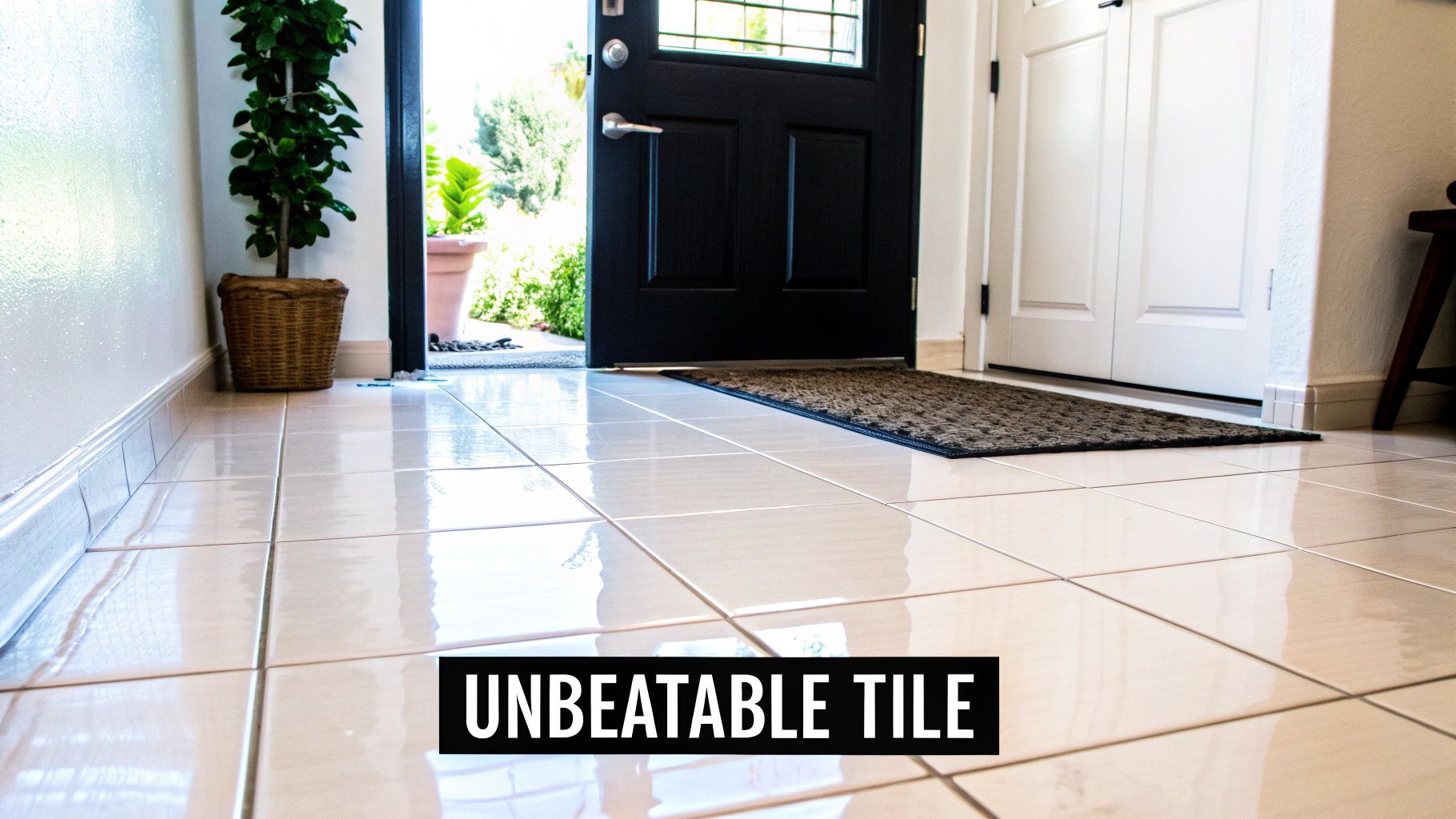
When your rental needs a floor that’s pretty much indestructible, porcelain and ceramic tile are really the only game in town. For those high-traffic, high-moisture zones like kitchens, bathrooms, and entryways, tile brings a level of toughness that other materials just can't touch. It’s the ultimate “one-and-done” investment.
Sure, the upfront cost is higher than LVP or laminate. But a professionally installed tile floor can easily last for decades—often outliving the landlord. This incredible longevity makes it one of the most cost-effective choices over the long haul, protecting your investment against the constant churn of tenant turnover.
The Long-Term ROI of Tile
The true genius of tile flooring reveals itself over time. Its dense, hard surface is incredibly resistant to scratches, dents, and water damage, which means repair costs are virtually nonexistent. While other floors might need a full replacement every 10 to 15 years, a quality tile installation stays solid and attractive, holding your property’s value steady.
A tile floor is a permanent upgrade to your property. Its extreme durability and low maintenance needs mean you can install it once and essentially forget about it, providing peace of mind for years to come.
This long-term reliability is where the ROI really shines. Porcelain tile, in particular, reigns supreme for landlords who want ultimate longevity where moisture and wear are relentless. Tiles with a PEI wear rating of 5 can handle commercial-grade traffic for 20+ years, leading to 50% fewer replacements than vinyl or laminate in high-turnover rentals. And even though the initial investment is 20-30% higher than LVP, the lifecycle savings can hit 40% because of the minimal upkeep. You can read more about these flooring market trends and how they impact the industry.
Balancing Hygiene and Tenant Comfort
Beyond its sheer toughness, tile offers some serious hygienic perks. Its non-porous surface is a terrible place for mold, mildew, and allergens to grow, making it a great selling point for health-conscious tenants. This is especially valuable in humid climates or in properties where air quality is a big deal.
Of course, tile isn't perfect. The biggest complaints from tenants are usually its cold, hard feel underfoot and the chore of keeping grout clean. Luckily, these are easy fixes:
- Warmth: Suggesting area rugs in living spaces and bedrooms adds a cozy, warm touch.
- Grout: Using a high-quality epoxy grout or applying a tough sealer during installation drastically cuts down on deep cleaning and prevents stains from setting in.
By taking these simple steps, you can offer the unbeatable durability of tile while still giving your tenants a comfortable and beautiful place to live.
Your Top Rental Flooring Questions, Answered
Even after comparing all the options, a few specific questions always seem to pop up right when you’re about to pull the trigger. Let’s tackle the most common ones we hear from landlords so you can feel confident in your final decision.
What Is the Most Durable Flooring for a Rental with Pets?
When it comes to pets, Luxury Vinyl Plank (LVP) is the hands-down winner. Its tough wear layer stands up incredibly well to scratches from claws, and because it's 100% waterproof, you don't have to worry about pet accidents causing the planks to swell or, worse, damaging the subfloor. Cleanup is a breeze, and it prevents those lingering issues that can cost you down the road.
Porcelain tile is another fantastic, practically scratch-proof choice. The only catch is the grout lines, which can stain if they aren't sealed properly. Both of these options are worlds better than carpet, which is a magnet for odors and stains, or traditional hardwood, which scratches easily and can be ruined by moisture.
Is Engineered Hardwood a Good Investment for a High-End Rental?
For a luxury rental, engineered hardwood can be a brilliant move. It delivers that authentic, high-end wood look and feel that premium tenants are looking for and often helps justify a higher rent price. It simply elevates a space in a way that even the best vinyl sometimes can't match.
But you have to go into it with your eyes open—it's a calculated trade-off. You're swapping some durability for superior aesthetics. Engineered wood is more susceptible to scratches and water damage than LVP or tile. If you go this route, make sure to pick a product with a thick wear layer that allows for at least one refinishing, stretching your investment as far as it can go.
How Can I Reduce Flooring Replacement Costs Between Tenants?
Minimizing turnover costs all comes down to choosing durable, easily repairable flooring from the start. LVP and its tile-shaped counterpart, LVT, are perfect for this because you can replace a single damaged plank or tile without having to tear out the whole floor. That modular design is a huge money-saver over the life of your property.
Another pro tip is to standardize the flooring across all your units. It makes maintenance so much simpler and lets you keep extra stock on hand for quick, perfect patches between tenants. Finally, giving your tenants clear care instructions and a few packs of felt furniture pads can dramatically extend the floor’s life, pushing back the date for a full, costly replacement.
At Edinhart Realty and Property Management, we guide landlords through smart, profitable decisions like these every single day. If you’re looking for expert property management that protects your investment and grows your bottom line, learn more about our comprehensive services at https://edinhart.com.


