

Thinking about remodeling your bathroom? It’s one of the smartest investments you can make in your home. Nationally, you can expect a return on investment (ROI) that typically falls somewhere between 70% and 85%. That means for every dollar you put in, you’re likely to see a good chunk of it come back by boosting your home’s total value.
Understanding Your Bathroom Remodel ROI

Let's break down what ROI really means. Think of it like planning a road trip. You wouldn't just start driving without a destination in mind, right? The same logic applies here—you shouldn’t tear out a single tile without understanding the financial destination of your project.
ROI is just a simple way to measure how profitable your remodel is. It tells you exactly how much of the money you spent will be added back to your home's sale price.
For example, say you spend $15,000 on a bathroom refresh. If that project increases your home’s appraised value by $12,000, you’ve recouped 80% of what you spent. That’s the core idea of ROI and the goal every savvy homeowner should be aiming for.
The Three Tiers of Bathroom Remodeling
Of course, not all remodels are created equal, and their ROI can swing pretty dramatically depending on the scope. Projects generally fall into three main buckets, each with its own budget and expected return.
- Minor Remodel: This is all about high-impact, low-cost cosmetic fixes. Think a fresh coat of paint, new fixtures, an updated toilet, or even reglazing the tub. It’s the easiest on the wallet and often brings the highest ROI.
- Midrange Remodel: This is a more involved project. We're talking about replacing the vanity, putting in new flooring, and swapping out the entire tub/shower combo. It’s a great middle ground for a noticeable upgrade without breaking the bank.
- Upscale Remodel: This is the full gut job. You might be moving walls, installing high-end materials like natural stone, adding heated floors, and bringing in luxury fixtures. It’s a showstopper for sure, but it also tends to have the lowest percentage return.
To make this crystal clear, here’s a quick breakdown of what you can expect from each level of remodel.
Bathroom Remodel ROI at a Glance by Project Scope
| Remodel Tier | Typical Cost Range | Average ROI Percentage |
|---|---|---|
| Minor Remodel | $3,000 – $10,000 | 70% – 85% |
| Midrange Remodel | $10,000 – $30,000 | 60% – 75% |
| Upscale Remodel | $30,000+ | 45% – 60% |
The data is pretty clear: smart, strategic updates often deliver a much better financial result than over-the-top luxury renovations.
While bathroom remodels offer a fantastic return, it’s always a good idea to see how they stack up against other home improvements. For a deeper dive, check out our guide on kitchen remodel return on investment. Getting a handle on these numbers is the first step to making choices that not only make your home more beautiful but also add real, tangible value.
How Your Project's Scope Defines Its Financial Return
Not all remodels are created equal, and the scope of your project is hands-down the biggest factor shaping your financial outcome. It’s a lot like tuning up a car—sometimes a simple, strategic adjustment gives you a better performance boost than a complete engine overhaul. The same idea applies to your bathroom remodel return on investment, where a lighter touch often delivers the heaviest financial punch.
The key thing to grasp is that every dollar you spend doesn't automatically add a dollar to your home's value. The relationship between your cost and the value you get back changes dramatically as your project gets bigger and more complex. Let's dig into how different project scopes can lead to wildly different results.
Minor Remodels: The ROI Champion
The undisputed winner for the highest percentage return is almost always the minor bathroom remodel. This approach is surgical. It focuses on high-impact, low-cost updates that refresh the space without getting into massive demolition or sky-high labor bills.
These projects are all about cosmetic fixes that catch a buyer's eye and make the entire room feel modern and clean. It’s about creating the biggest visual impact for the smallest possible price tag.
Common minor remodel jobs include:
- A fresh coat of moisture-resistant paint in an appealing, neutral color.
- Swapping out dated faucets, showerheads, and cabinet pulls with modern designs.
- Installing a new, stylish light fixture or a better-looking vanity mirror.
- Updating a worn-out toilet with a more efficient model.
These small changes can often be done for just a few thousand dollars but make the bathroom look drastically better, which directly boosts its appeal and perceived value.
Midrange Remodels: Striking a Smart Balance
A midrange remodel is that happy medium, offering a real transformation that homebuyers love without going overboard on spending. This is where you replace major components that are visibly worn or outdated, creating a bathroom that genuinely feels new.
This scope hits a crucial balance between cost and value. While you're spending more than you would on a minor touch-up, the upgrades are substantial enough to justify a solid bump in your home's asking price. For most homeowners, this is the renovation "sweet spot."
A midrange remodel costing around $25,000 often adds approximately $18,000 to $19,000 in home value. This works out to a strong return on investment of about 74%, making it a very popular and financially sound choice. You can explore more detailed cost breakdowns to get a better feel for these investment ranges.
Typical midrange projects involve things like replacing the vanity and countertop, putting in new floor and shower tile, and installing a new tub or shower enclosure. These are the kinds of upgrades most buyers expect to see in a move-in-ready home.
Upscale Remodels: The Law of Diminishing Returns
Finally, we get to the upscale remodel. This is the full-gut renovation involving high-end materials, luxury features, and often a completely new layout. Think heated floors, natural stone countertops, steam showers, and custom-built cabinetry.
While these bathrooms look absolutely incredible, they perfectly illustrate the law of diminishing returns. The staggering cost of luxury materials and specialized labor means you're almost never going to get your full investment back. Buyers certainly appreciate these fancy features, but they’re rarely willing to pay a premium that covers the entire bill.
Upscale remodels are really for homeowners who care more about their own enjoyment than they do about maximizing financial returns. While they do add value, the ROI percentage is usually the lowest of the three tiers, often hovering around 42-50%. Your home will feel more luxurious, but the direct financial payback just isn't as efficient.
Pinpointing Upgrades with the Highest ROI
When it's time to remodel, the real question isn't just "what looks good?" It's "where will my money make the biggest impact?" To get the best return on your investment, you have to think like a savvy investor, putting your cash into upgrades that actually deliver results.
It's all about finding those specific features that home buyers consistently value the most. Some upgrades are just clear winners, offering that perfect mix of better looks, improved function, and a high perceived value that makes them worth every penny.
The Power Trio of High-Return Upgrades
While it might be tempting to tear everything down to the studs, the numbers don't lie. A few key replacements almost always give you the best bang for your buck. These are the workhorses of a high-ROI remodel—they impress buyers without draining your bank account.
Let's break down the top performers that consistently bring in strong returns:
- The Vanity and Countertop: The vanity is the centerpiece of the bathroom. If it's old, scratched, or too small, it can make the whole room feel dated. A modern, clean-lined replacement gives the space a huge visual lift and adds storage, which is something every buyer wants.
- The Toilet: An old, inefficient toilet is more than just an eyesore; it's a water-waster. Swapping it for a modern, water-efficient model is a cheap fix with a surprisingly big impact. It tells buyers the home has been well-maintained and is mindful of utility costs.
- Fixtures and Hardware: Never underestimate the little things. Trading out dated faucets, showerheads, cabinet pulls, and towel bars is one of the fastest and most affordable ways to modernize a bathroom. Sleek, contemporary finishes can instantly make the room feel fresh and put-together.
This chart breaks down the average ROI for some of the most effective bathroom upgrades you can make.
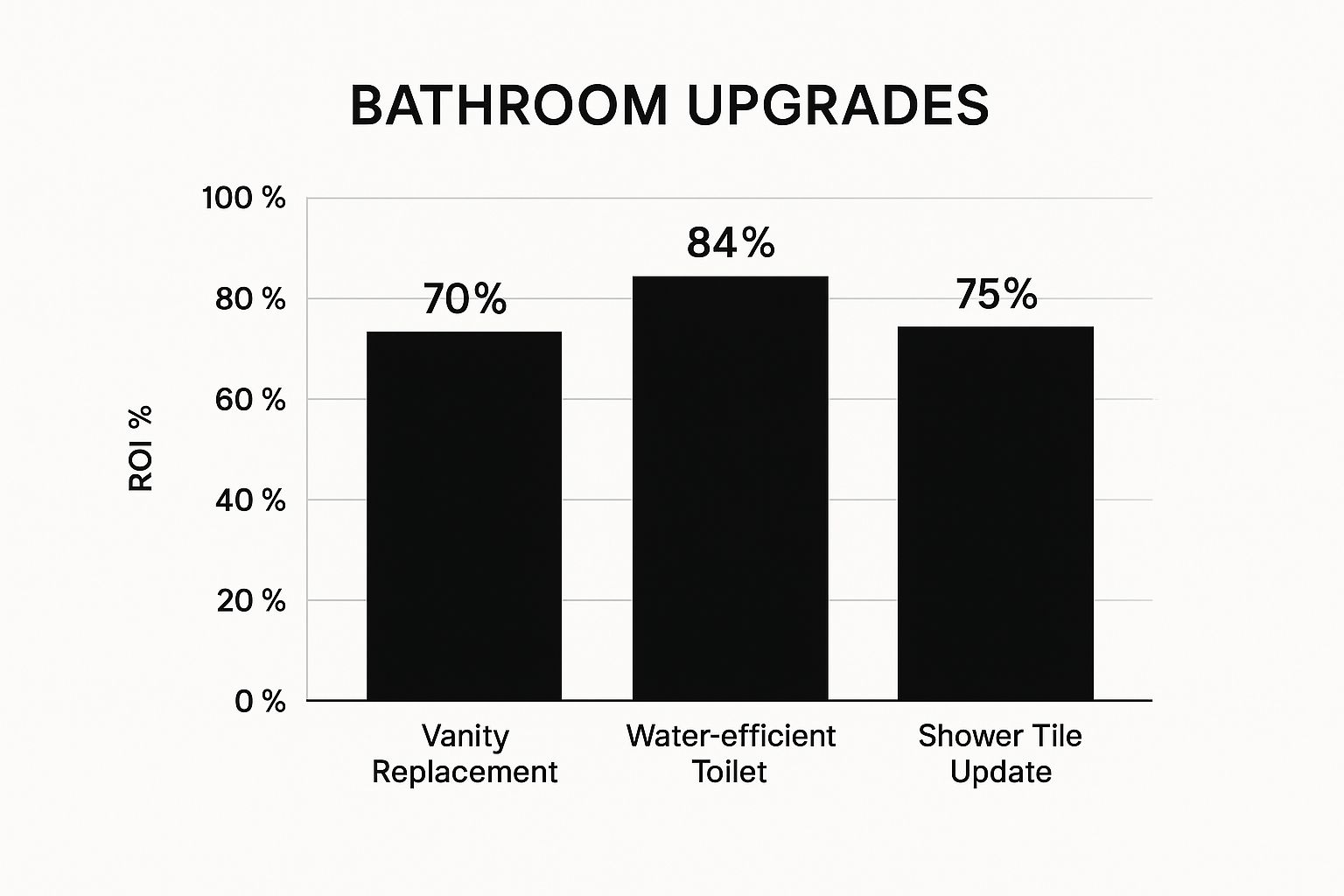
As you can see, practical and eco-friendly updates like a new toilet often lead the pack in recouping costs. It just goes to show that practicality really sells.
Cost vs. Value of Top Bathroom Upgrades
Deciding where to spend your money can feel overwhelming. To make it easier, we've broken down some of the most common upgrades, comparing their typical cost to the value they bring back at resale. This should help you prioritize your budget for maximum impact.
| Upgrade Component | Average Cost | Impact on ROI | Best Practice Tip |
|---|---|---|---|
| New Toilet | $350 – $700 | High (often >100%) | Choose a water-efficient, comfort-height model for broad appeal. |
| Vanity & Countertop | $1,500 – $3,500 | High | Opt for a neutral stone countertop and a vanity with ample storage. |
| Fixtures & Hardware | $200 – $500 | High | Select a matching set in a timeless finish like brushed nickel or matte black. |
| Tile (Floor & Shower) | $2,000 – $5,000 | Medium to High | Stick with classic subway tile or large-format neutral tiles. Avoid trendy patterns. |
| Walk-in Shower | $4,000 – $8,000 | Medium to High | A frameless glass enclosure makes the bathroom feel larger and more modern. |
| Lighting | $250 – $650 | Medium | Layer lighting with a bright overhead fixture and sconces by the mirror. |
Ultimately, the smartest investments are those that combine modern aesthetics with proven functionality. These are the upgrades buyers notice and appreciate the most.
Tile: The Foundation of Bathroom Style
Your flooring and shower tile set the entire mood for the bathroom. If the tile is cracked, stained, or just plain out of style, it can drag down even the brand-new fixtures. Updating your tile is a mid-range investment, but it delivers a major return, both visually and financially.
When you're picking out new tile, timeless is always the way to go. Stick to neutral colors like whites, grays, and beiges. Classic patterns like subway tile for the shower walls or simple large-format tiles for the floor appeal to just about everyone and won't look dated in a few years. Bold, trendy patterns might catch your eye, but they can easily turn off buyers who don't share your exact taste.
The goal is to create a clean, bright, and inviting canvas that allows buyers to envision themselves in the space. Neutral and universally appealing design choices almost always outperform niche trends when it comes to resale value.
Functionality and Universal Appeal Drive Value
Beyond just looking good, upgrades that make the bathroom more functional and accessible will broaden your home’s appeal. For example, converting an old tub-shower combo into a sleek, walk-in shower is a huge hit with buyers. It not only feels more modern and spacious but also works for a wider range of people, including older adults or anyone with mobility issues.
Good lighting can also completely transform the feel of a room. Replacing a single, dim fixture with layered lighting—like sconces next to the mirror and a bright overhead light—makes the space feel larger and more usable.
For more great ideas, our guide on the best home renovations for resale offers plenty of other insights. By focusing on these high-impact areas, you can be sure your renovation budget is working as hard as possible to boost your home’s final sale price.
Why Your Local Market Dictates Remodel Value
Thinking about the bathroom remodel return on investment as a single, universal number is a big mistake. It's like assuming a winter coat is just as valuable in Fresno as it is in Alaska. The reality? Your project's financial success is completely tied to where you live. Location isn't just a factor; it's the entire game.
A super high-end, luxury remodel might be a showstopper in a coastal city, but in a more modest suburban neighborhood, it could just be seen as an unnecessary expense. What buyers expect—and what they're willing to pay a premium for—changes dramatically from one block to the next.
This is why you absolutely must understand your local real estate climate. National averages are a decent starting point, but they can't tell you what a buyer walking through your front door is actually looking for.
National Averages Versus Local Realities
While national figures give us a great bird's-eye view, the real story is always local. The national average ROI for a midrange bathroom renovation is a solid 80%, but that number is just a mash-up of countless local markets. Some do okay, and some do way, way better.
For example, some states see returns that blow past the national average. Homeowners in South Dakota can get back an impressive 93.5% of what they spend. Arkansas isn't far behind with 92.8%. Even states like Nevada and California pull in strong numbers at 86.8% and 85.8%, respectively. You can discover more insights about these bathroom remodel ROI variations to see just how much location matters.
This regional difference highlights a key truth: your home's value is directly influenced by the homes around it. A bathroom that fits the local standard will always be a smarter investment than one that's either way over-the-top or seriously lagging behind the competition.
How to Research Your Local Market
So, how do you get a feel for your local market? You have to become a student of your own neighborhood's real estate trends. A little homework here is the most important step you can take to make sure your remodel pays off.
Start by doing some digital detective work. Hop on the real estate sites and look up recent home sales in your area. Pay very close attention to the photos and descriptions, especially for the bathrooms.
- Analyze Recently Sold Homes: What do the bathrooms in houses that sold quickly and for a good price look like? Are they clean and simple, or are they decked out with luxury finishes?
- Note Common Features: Are you seeing a lot of walk-in showers instead of tubs? Have double vanities become the new standard for homes your size?
- Compare Asking vs. Selling Prices: Look for patterns. Do homes with fresh, new bathrooms sell faster or closer to the asking price than homes with dated ones?
This simple analysis gives you a powerful snapshot of what buyers in your specific market expect. It helps you stop guessing what they want and start knowing what they’re already paying for.
Consulting the Local Experts
Online research is great, but nothing beats the firsthand knowledge of professionals who are in the trenches every day. Local real estate agents and property managers are your secret weapon.
They know exactly what features help a home sell or rent quickly for top dollar. An agent can tell you, "In this part of town, a dated master bath is a deal-breaker, but nobody really cares about heated floors." That kind of specific, actionable advice is pure gold.
Before you lock in any plans, have a chat with a local real estate pro. A short conversation can save you thousands by helping you put your money where it matters most, making sure your bathroom remodel is a true financial win.
Smart Financial Strategies for Your Renovation

Getting the best bathroom remodel return on investment goes way beyond picking out nice tile. The real money is made—or lost—in how you plan, budget, and manage the project from the get-go. With a smart game plan, you can sidestep common money pits and end up with a renovation that’s not just beautiful, but profitable too.
It helps to think of your remodel like a small business venture. You need a solid plan, a budget you can stick to, and a clear eye for where to spend and where to save. This mindset shifts your focus from just aesthetics to smart financial choices, which is exactly what delivers a strong return when you eventually sell.
Plan for Broad Appeal
If there's one golden rule for a high-ROI remodel, it's this: appeal to as many people as possible. Your personal taste might lean toward bold, trendy designs, but that can be a major turn-off for potential buyers down the road. The safest—and most profitable—bet is always a clean, timeless, and universally attractive space.
- Stick to Neutral Palettes: Think whites, grays, and soft beiges. These colors make a bathroom feel bright and spacious, letting buyers easily imagine their own style in the room.
- Prioritize Functionality: Focus on practical upgrades that make life easier. We’re talking about better storage, great lighting, and water-efficient fixtures.
- Embrace Accessibility: Features like walk-in showers with low or no curbs feel sleek and modern, but they also appeal to buyers of all ages and abilities. That's a huge plus that broadens your home's market.
These choices create a bathroom that feels fresh and move-in ready to almost anyone who walks through the door, a massive selling point. If a sale is on your mind, figuring out which home repairs to make before selling can help you focus your budget even more effectively.
A bathroom designed with universal appeal acts as a blank canvas. It helps prospective buyers see the home's potential without getting distracted by a design that is too specific or personal.
Protect Your Budget with Smart Tactics
A gorgeous design means nothing if the project spirals over budget and eats up your potential ROI. Protecting your bottom line comes down to discipline and a few proven tactics that keep costs locked in from start to finish.
Your first line of defense is a firm, realistic budget. This number should be based on your home's value and what’s standard in our local market, not just what's on your dream bathroom Pinterest board. For anyone looking to get the most bang for their buck, checking out some smart, budget-friendly bathroom remodel ideas is a great way to find inspiration for cost-effective upgrades.
Once that budget is set in stone, make sure to get at least three detailed quotes from reputable contractors. This does more than just help you find a fair price; it gives you a much clearer picture of what labor and materials actually cost in our area.
Know When to DIY and When to Hire a Pro
One of the best ways to cut down your project cost is by rolling up your sleeves and doing some of the work yourself. Labor can easily eat up 40-60% of a renovation's total cost, so every task you can tackle is money straight back into your pocket.
But you have to be honest about your skill level. A botched DIY job can end up costing you far more to fix than it would have to just hire a professional in the first place.
Smart DIY Tasks:
- Demolition (with care!)
- Painting walls and trim
- Installing a new vanity or toilet
- Swapping out hardware like faucets and cabinet pulls
Jobs for the Professionals:
- Anything involving complex plumbing or electrical work
- Intricate tile installation, especially in a shower
- Any projects that require moving walls or other structural changes
By taking a hybrid approach—hiring pros for the technical stuff and handling the cosmetic updates yourself—you can slash expenses without sacrificing the quality of the final product. That balanced strategy is your playbook for a financially successful renovation.
Planning Your Profitable Bathroom Remodel
Thinking about a bathroom remodel as just another expense is a mistake. It’s actually a strategic investment in your home's equity. When you start seeing the project through that lens, you shift from just picking out pretty tile to making smart, calculated decisions that will actually boost your property’s value. The secret to a profitable outcome? It all comes down to careful planning.
Here’s the most important thing to remember: minor-to-midrange projects almost always deliver the highest bathroom remodel return on investment. These are the renovations that focus on high-impact, universally appealing upgrades—think modern fixtures, a fresh coat of paint, and a functional new vanity—not the super expensive, niche luxuries that only appeal to a few.
By tailoring these plans to the local market, you can make sure your investment lines up with what Fresno buyers are actually looking for and, more importantly, what they're willing to pay a premium for.
Your Blueprint for Success
To keep your project from going off the rails and to squeeze every last drop of value out of it, stick to these core principles:
- Establish a Firm Budget: Don’t just pick a number out of thin air. Base your spending on a percentage of your home's current value to avoid the classic mistake of over-improving for your neighborhood.
- Focus on Universal Appeal: Now is not the time for that quirky tile you saw on Pinterest. Choose neutral color palettes and timeless designs that will appeal to the widest possible audience of potential buyers.
- Prioritize Functionality: Practical upgrades always win. Emphasize things like better storage, brighter lighting, and water-efficient fixtures that make daily life easier.
The most profitable bathroom remodels are born from careful preparation, not impulse decisions. A well-defined plan is your single best tool for protecting your budget and maximizing your financial return.
As you dive into the details, it’s a huge help to consult an ultimate house renovation checklist. This will make sure you don't miss any critical steps along the way, from the initial idea to the final walkthrough.
Armed with the insights from this guide, you’re now ready to create a bathroom that’s not only beautiful and functional for you today but also one that secures a strong return on your investment when it’s time to sell. Your profitable remodel starts right now, with a clear plan in hand.
Your Top Questions About Bathroom ROI, Answered
Jumping into a home renovation always brings up a ton of questions, especially when you’re trying to make a smart financial move. Getting the details right is the secret to maximizing your bathroom remodel return on investment. We'll break down the most common questions we hear from homeowners to give you the clarity you need.
From project timelines to the classic DIY vs. pro debate, here’s the inside scoop to help you plan with confidence and make choices that pay off big time.
How Long Does a Typical Bathroom Remodel Take?
Honestly, the timeline is all about the scope of your project. A quick cosmetic refresh—think a new coat of paint, updated fixtures, and a new mirror—can often be knocked out in just a few days or a week.
A midrange remodel is a bigger commitment. When you’re replacing the vanity, toilet, and flooring, you're usually looking at a 2 to 4 week timeline. That window covers everything from demolition and minor plumbing tweaks to installation and all the final finishing touches.
For an upscale, down-to-the-studs gut renovation, you'll need to be more patient. These projects can easily take 4 to 8 weeks, and sometimes even longer. It's smart to plan for delays, especially if you're moving walls, rerouting major plumbing lines, or waiting on custom tile to arrive. Always build a little buffer time into your schedule for the unexpected.
Is It Better to Add a Bathroom or Remodel One for ROI?
When you’re looking strictly at the numbers, remodeling an existing bathroom almost always gives you a better return on your investment than adding a brand-new one. The logic is simple: adding a bathroom is a massive undertaking with costs that can soar past $50,000.
While adding a new bathroom can be a game-changer for a home’s functionality (especially going from one bath to two), the cost you get back is often lower—usually around 50-60%. Updating a tired, old bathroom is a much more direct and cost-effective way to boost your home’s value.
The right choice really boils down to your home’s current setup and what buyers in your neighborhood expect. If your house is the only three-bedroom on the block with just one bathroom, an addition might be the better long-term value play, even with a lower ROI percentage.
Can I Increase My ROI by Doing the Remodel Myself?
You absolutely can! Going the DIY route can give your ROI a serious boost, but it comes with one huge condition: the work has to look professional. The big win with DIY is saving on labor, which can eat up 40-60% of a typical remodel budget.
Most homeowners can confidently tackle jobs like:
- Careful demolition of old fixtures
- Painting walls and trim
- Installing a new vanity or toilet
- Swapping out hardware and light fixtures
But here's where you need to be careful. A mistake with plumbing, electrical, or tiling can be a nightmare to fix and can actually drag your home's value down. For most people, a hybrid approach is the smartest way to maximize ROI. Hire licensed pros for the technical stuff that requires permits and specialized skills, and then roll up your sleeves for the cosmetic finishing work. It’s the perfect balance of saving money without sacrificing safety or quality.
Planning a renovation can feel like a lot, but you don’t have to go it alone. Whether you’re getting your property ready to sell or hoping to increase its rental value, the team at Edinhart Realty and Property Management can offer expert advice on which upgrades will deliver the best returns right here in the Fresno market. Contact us today to see how our real estate and property management know-how can help you make the most profitable decisions for your home.


