

A thorough background check for renters isn't just some formality you have to check off a list. It's the single most important step you can take to protect your rental property investment. This is where you get a clear, data-driven picture of who an applicant really is, helping you dodge major headaches like unpaid rent, property damage, and ugly legal battles before they ever start.
Why a Renter Background Check Is Your First Line of Defense

Think of tenant screening as your ultimate risk management tool. We've all heard the horror stories—the tenant who vanishes overnight, leaving behind thousands in damages, or the one whose late payments slowly bleed your profits dry. These aren't just myths; they're often what happens when a landlord skips the vetting process. A systematic check takes the guesswork out of the equation, letting you make a smart business decision instead of relying on a gut feeling.
This isn't about putting up roadblocks for good people. It’s about finding a responsible tenant who will treat your property with respect and honor their lease. A great tenant means a stable, profitable rental business and a safer community for everyone living there.
What a Renter Background Check Actually Tells You
A proper background check dives into several key areas, each giving you a different piece of the puzzle. When you put them all together, you get a complete picture of the applicant.
| Screening Component | What It Reveals | Why It Matters for Your Property |
|---|---|---|
| Credit Report | An applicant's full financial history, including their payment patterns, debt levels, bankruptcies, and accounts in collections. | A history of late payments or maxed-out credit is a major red flag. It shows how they handle financial obligations, which directly predicts their ability to pay rent on time. |
| Criminal History | Any past criminal convictions. It's crucial to focus only on convictions relevant to a tenancy, always following Fair Housing laws. | This is all about community safety. You have a responsibility to ensure a safe living environment for your other tenants and neighbors. |
| Eviction Records | A documented history of any previous evictions filed against the applicant. | Past behavior is the best predictor of future behavior. A prior eviction is one of the strongest indicators of potential problems down the road. |
| Income & Employment | Verifies where the applicant works, how much they earn, and the stability of their job. | This confirms they have a steady, sufficient source of income to comfortably cover the rent month after month. It's the foundation of financial reliability. |
Each of these checks gives you crucial insight that a simple application form can't provide.
A Smart Business Practice
It's no surprise that landlords are taking this more seriously than ever. The global tenant screening market was valued at around $3.28 billion in 2023 and is expected to jump to $5.37 billion by 2030. This isn't just a trend; it's a fundamental shift in how property owners protect their investments.
In fact, one survey showed that 44% of landlords wouldn't overlook relevant criminal history, proving just how critical this data is in their final decision.
By treating tenant screening as a core business practice, you’re not just filling a vacancy. You’re protecting your asset, securing your income, and fostering a safe community. It’s the difference between being proactive and constantly putting out fires.
Ultimately, a diligent screening process is your best defense against https://edinhart.com/avoiding-a-bad-tenant/ and the incredible stress they can cause. It sets a professional tone from the very beginning and lays the groundwork for a successful landlord-tenant relationship built on mutual trust.
Building Your Legally Sound Tenant Screening Policy
https://www.youtube.com/embed/8YHXOJJ75g0
Before you even think about listing your property, the single most important document you need to create is a written tenant screening policy. Don't think of this as more red tape—it's your operational playbook. It's a clear, consistent, and legally defensible framework for how you'll evaluate every single applicant who comes your way. This document is your number one shield against accusations of housing discrimination.
Consistency is really the cornerstone of Fair Housing Act (FHA) compliance. When you have a predefined, objective set of criteria written down, you take the guesswork and potential for unconscious bias out of the equation. You apply the exact same standards to every person, which ensures a fair process and creates a documented trail proving your methods are impartial.
A good policy isn't just about turning away unqualified applicants; it's about confidently picking the right ones. It sets clear expectations right from the start, saving time for both you and potential renters.
Establishing Objective Financial Criteria
Your policy’s financial requirements need to be specific and measurable. Vague rules are a nightmare to apply consistently and even harder to defend if you're ever questioned. Start by defining your core financial standards.
- Minimum Credit Score: You'll want to set a reasonable minimum credit score that indicates financial responsibility. For example, you might decide on a minimum score of 650. This number becomes a clear, non-negotiable benchmark for every application you review.
- Income-to-Rent Ratio: The industry standard is the "3x rule," which requires an applicant's gross monthly income to be at least three times the monthly rent. This is a great predictor of on-time payments, as it shows they can comfortably afford the rent without serious financial strain.
- Debt and Payment History: I always tell landlords to look beyond just the score. Your policy can state that you'll review for patterns of late payments, accounts sent to collections, or an unusually high debt-to-income ratio. These are red flags for potential financial instability.
Putting these exact numbers into your policy means your decisions are based on data, not feelings. If an applicant with a 640 credit score asks for an exception, you can point directly to your written policy. It shows your decision is based on established criteria you apply to everyone.
Setting Standards for Rental and Criminal History
An applicant's financial health is only one piece of the puzzle. Your screening policy also has to address their rental and criminal history, and you have to do it lawfully. This is where precision and knowing your local laws are absolutely vital.
For instance, your policy on evictions should be crystal clear. You might state that any eviction filing within the last five years is grounds for automatic denial. This creates a black-and-white rule that's simple to enforce fairly across the board.
When it comes to criminal history, you need to tread very carefully. A blanket policy of denying anyone with a criminal record is a fast track to a discrimination claim. Instead, your policy should focus on convictions that are directly relevant to the safety of the property and other residents, always staying in compliance with HUD guidance.
A strong policy might state: "We will conduct an individualized assessment of criminal convictions that have occurred within the last seven years, considering the nature and severity of the crime and its potential impact on the tenancy."
This approach demonstrates that you're being thoughtful, not discriminatory. Given the complexities, especially in states with unique regulations, understanding the specifics of landlord-tenant law in California can give you essential context for crafting a compliant policy.
As you build out your criteria, getting some practical insights can make all the difference. Check out these expert tips on how to screen tenants effectively to help inform your methods. At the end of the day, a well-defined, written policy is the most powerful tool you have for conducting a fair and effective background check for renters.
Understanding the Rules of Tenant Screening
Running a background check on a potential renter isn't the Wild West. It's a tightly regulated process, and you absolutely have to know the rules. A whole web of federal, state, and even city laws are in place to keep the process fair and prevent discrimination. Honestly, navigating this legal landscape is non-negotiable. One small misstep, even an accidental one, can land you in some serious legal and financial hot water.
The big one you need to know is the federal Fair Credit Reporting Act (FCRA). This law basically governs how consumer information is gathered, shared, and used. For landlords, the most critical takeaway is this: you cannot run a background check without getting explicit, written consent from the applicant first. A verbal "okay" just won't cut it.
This consent form can't be buried in the fine print. It needs to be a standalone document or a very clearly marked section of your application, letting the applicant know you'll be using the info to make a rental decision.
Federal Laws Are Just the Starting Point
Getting consent is step one, but the FCRA's requirements don't stop there. If you decide to turn down an applicant because of something that popped up on their background check—credit issues, criminal history, an old eviction—you are legally required to give them an "adverse action notice."
This isn't just a courtesy; it's the law. The notice has to include:
- The name, address, and phone number of the screening company you used.
- A clear statement that the screening company didn't make the rejection decision and can't explain why you did.
- A heads-up that the applicant has the right to get a free copy of their report from that company within 60 days.
- Information on their right to dispute anything in the report they believe is inaccurate.
Following the FCRA is your first line of defense. But don't make the mistake of thinking it's your only responsibility.
The Critical Role of State and Local Laws
While the FCRA sets the national baseline, many states and cities have piled on their own, often much stricter, tenant protection laws. This is where a lot of landlords get tripped up. Assuming you're covered just by following federal law is a costly gamble.
For instance, a growing number of areas have "ban the box" or fair chance housing laws. These change how and when you can even ask about an applicant's criminal past. Some places say you can't ask about it on the initial application at all, forcing you to make a conditional offer first. Others limit you from considering old convictions or arrests that never led to a conviction.
On top of that, many states put a cap on what you can charge for an application fee, making sure it only covers your actual out-of-pocket screening costs. Staying on top of these hyper-local rules is essential. And beyond screening, having a solid grasp of general premises liability law is just part of being a well-informed, legally protected landlord.
Ensuring Fairness and Avoiding Bias
Your legal duty goes beyond just following the procedural steps; it extends to how you actually interpret and use the data. Screening technology has made things faster, but it also opens up new cans of worms. It’s estimated that up to 90% of landlords now use some form of screening tech, but these automated reports can be full of errors or unfair scoring that just make it harder for people to find housing.
A California survey found that Black and Latino applicants were nearly half as likely to be approved as white applicants, a stark reminder of how these tools can amplify bias if you're not careful. For more on this, check out the insights on the complexities of automated tenant screening on shelterforce.org.
As a landlord, it’s on you to use reputable screening services and to look at the results with a fair and human eye. A background check is a tool for assessing risk, not a rubber stamp for bias. The key is to apply your screening criteria consistently to every single applicant, no exceptions.
How to Run a Comprehensive Background Check
Alright, you've got a solid, legally sound screening policy written down. Now it's time to actually use it. This is where the rubber meets the road—moving from planning to action and gathering the real-world data you need to make a smart decision.
A thorough background check isn't just one step. It's a multi-layered look into an applicant's financial habits, criminal past, and rental history. The goal is simple: verify what they told you on the application and spot any red flags that might make them a risky tenant. You have to handle this process carefully and, most importantly, exactly the same way for every single person who applies.
The basic flow is straightforward, and it always starts with getting permission.
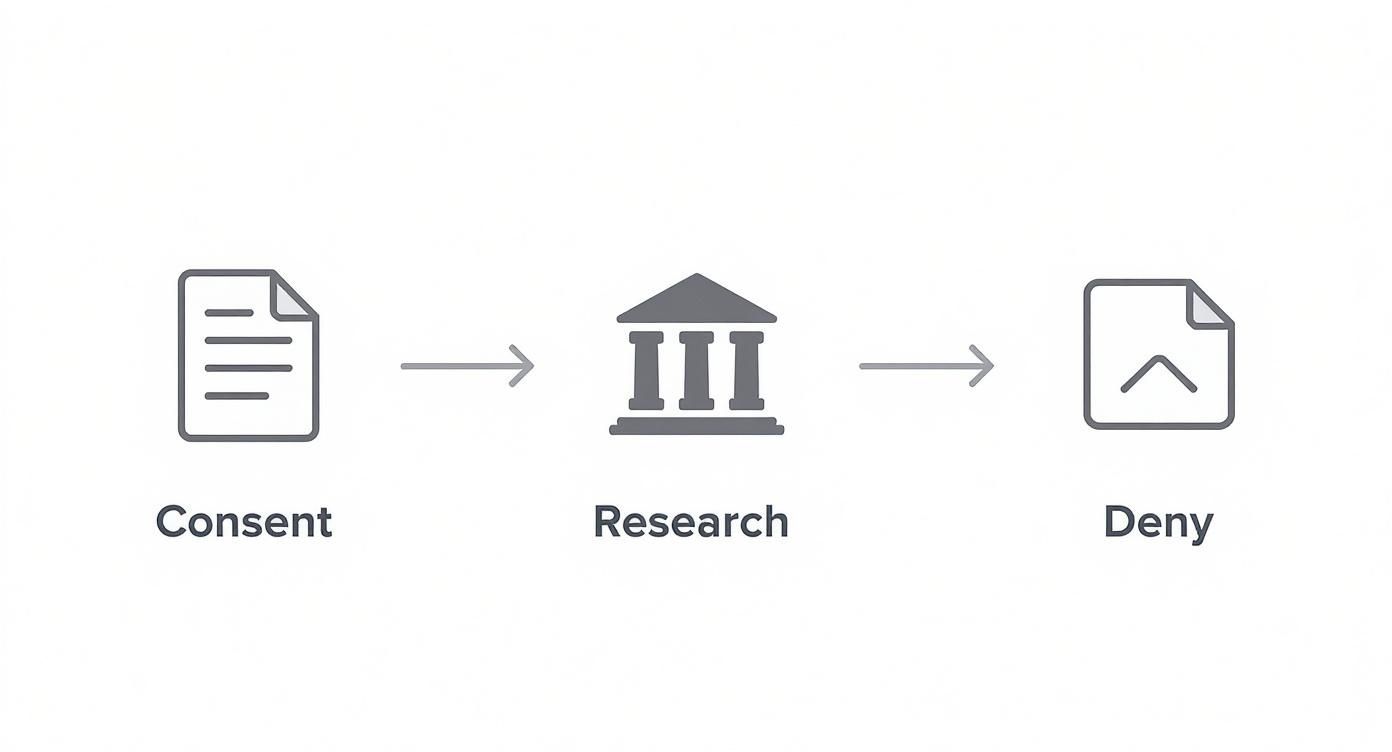
As you can see, you get legal consent, you do your homework, and you make a decision based on the criteria you've already set. No shortcuts.
Analyzing the Credit Report Beyond the Score
One of the biggest mistakes I see landlords make is getting fixated on that three-digit credit score. A score gives you a quick first impression, but the real story is buried in the details of the full report.
A 680 score might seem perfectly fine on the surface. But what if the report shows a string of late car payments and maxed-out credit cards over the last 12 months? That paints a very different picture.
When you get the credit report, dig deeper and look for these specifics:
- Payment History: Are late payments a habit? A single 30-day late payment from a year ago might have a reasonable explanation. A consistent pattern of late payments, however, points to someone who struggles with financial deadlines.
- Debt Levels: Sky-high credit card balances or massive personal loans can signal someone is under financial stress. Even if their income technically meets your 3x rent rule, this debt could make paying rent on time a constant struggle.
- Accounts in Collections: This is a huge red flag. An account sent to collections—especially for utilities or a previous landlord—means they didn't just miss a payment; they ignored a debt completely.
- Bankruptcies: A past bankruptcy isn't always an automatic "no." The key is to look at how recent it was and what they've done since to get back on their feet.
Looking at these details gives you a much more accurate sense of an applicant's financial responsibility than a single number ever could.
Reviewing Criminal and Eviction Histories Lawfully
The criminal and eviction reports are often the best predictors of future tenant behavior. But you have to navigate this part carefully to stay compliant with fair housing laws, including HUD guidance.
You can't just have a blanket policy that rejects anyone with a criminal record—that's illegal. Instead, the law requires an "individualized assessment." You need to focus only on convictions that are directly relevant to the safety of your property and other residents. A conviction for drug manufacturing is obviously a major concern. A minor traffic ticket from ten years ago? Not so much.
Eviction history is usually more black and white. A past eviction filing is one of the single biggest indicators of a future problem. Many experienced landlords, myself included, have a firm policy of denying anyone with an eviction on their record within the last 5-7 years.
The key takeaway here is to always focus on two things: relevance and recency. An old mistake doesn't define who a person is today, but a recent and relevant issue is a risk you simply can't afford to ignore.
Verifying Employment and Income
Never, ever just take an applicant's word for how much they make. You have to verify it. It's a critical step to make sure they can comfortably afford the rent month after month.
The standard best practice is to require their two most recent pay stubs. These are current, easy-to-verify documents that show their actual earnings. If they're self-employed, ask for their last two years of tax returns or recent bank statements that show consistent business income.
Once you have the documents, take five minutes to call the employer they listed. You don't need to be nosy. Just confirm their job title, start date, and that they are still employed. This quick call is your best defense against a fraudulent application.
Why Using a Professional Screening Service Is Smart
Look, you could try to piece all this information together yourself, but it's a massive headache and full of legal landmines. This is exactly what professional tenant screening services were made for.
These companies have secure access to the right databases and build their reports to comply with the Fair Credit Reporting Act (FCRA). They package the credit, criminal, and eviction data into one easy-to-read, compliant report. It saves you an incredible amount of time and drastically reduces your legal risk.
If you're not sure where to start, looking at a comparison of the best tenant screening services is a great first step to find a platform that fits your needs and budget.
Choosing Your Tenant Screening Service Level
Not all screening services are created equal. They generally fall into a few different tiers, from basic data pulls to comprehensive investigations. Here’s a quick breakdown of what you can typically expect at different service levels.
| Service Level | Common Checks Included | Typical Applicant Cost | Ideal for Landlords Who |
|---|---|---|---|
| Basic | Credit Report & Score, National Criminal Search, SSN Verification | $25 – $40 | Are hands-on and comfortable verifying income/employment themselves. |
| Standard | Everything in Basic, plus a National Eviction Search and Sex Offender Registry Check. | $40 – $55 | Want a more complete picture of an applicant's history with minimal extra work. |
| Premium | Everything in Standard, plus Income/Employment Verification and Previous Landlord References. | $55 – $75+ | Prefer to outsource the entire verification process for maximum confidence and time savings. |
Ultimately, using a professional service isn't just about convenience; it's about protecting your investment. By getting a complete and legally compliant report, you empower yourself to choose a reliable tenant and avoid the costly nightmare of a bad tenancy down the road.
How to Approve or Deny Applicants The Right Way

You’ve got the screening reports back, and now it’s time to make a call. This is where objectivity is everything. Your decision to approve or deny an applicant has to be a direct reflection of the written screening policy you already have in place. Stick to the facts in the report and measure them against your criteria—no exceptions, no gut feelings.
This data-driven approach is your best defense against discrimination claims. If an applicant doesn't meet your minimum credit score of 650 or their income isn't 3x the rent, the decision is straightforward and defensible. It completely removes emotion from the equation, turning a potentially subjective choice into a consistent business process.
The Easy Part: Approving an Applicant
Approving a qualified tenant is the fun part. Once you've double-checked that they meet all of your criteria, it’s time to extend an official offer of tenancy. Do this promptly and always in writing, usually with a quick email.
Your approval notice should be clear and concise, stating:
- That their application has been approved.
- The key terms, like the monthly rent and the required security deposit.
- The very next steps for signing the lease and paying the move-in funds.
This creates a clear, documented record of your offer and gets the ball rolling for a smooth lease signing. A professional approval process shows you’re an organized landlord and starts the relationship off on the right foot.
The Tricky Part: How to Deny an Applicant Legally
Denying an applicant is where you need to be extremely careful and follow the law to the letter. If your decision to reject a renter is based, even in part, on information from their background check, you are legally required by the Fair Credit Reporting Act (FCRA) to send them an adverse action notice.
This isn't just a professional courtesy; it’s a federal requirement. Blowing this off can expose you to some serious legal penalties. The notice is designed to make sure the applicant understands why they were denied and knows their rights.
An adverse action notice is a formal letter that informs an applicant they have been denied based on information in their consumer report. You must send one to every applicant you reject for reasons related to their credit, criminal, or eviction history.
The notice itself has to contain specific information to be compliant. You can’t just dash off a "sorry, you weren't approved" email and call it a day.
What to Include in an Adverse Action Notice
Your rejection letter must be professional and include all the elements required by the FCRA. Think of it as a standard template you use consistently for every denial.
Here’s exactly what the notice must include:
- The name, address, and phone number of the consumer reporting agency (the screening company) that gave you the report.
- A statement that the screening company did not make the decision and cannot explain the specific reasons for your denial.
- Notice of their right to get a free copy of their background check report from that company within 60 days.
- Information on their right to dispute the accuracy or completeness of anything in the report with the screening company.
Sending a compliant adverse action notice is a non-negotiable step in a lawful background check for renters. It protects you legally and treats applicants with the fairness required by law. Technology is also helping here. For instance, new screening tools are speeding things up, with 52% of applicants in the UK now using touchless digital ID to get through the process faster. You can learn more about these trends on fadv.com.
Common Questions About Renter Background Checks
Even with a rock-solid screening policy, you're bound to run into situations that make you pause. Getting these moments right is what separates the pros from the amateurs. Let’s walk through some of the most common questions and tricky scenarios that pop up during the tenant screening process.
Do I Need to Run a Background Check on Every Adult Occupant?
Yes. Unquestionably, yes. This isn't just a good idea; it's fundamental to protecting your property. You must require every single person 18 years or older who will be living in the unit to fill out their own application and consent to a full background check.
This rule applies to spouses, partners, adult children, and any other roommates. If you skip one person, you're flying blind. You could miss a serious eviction history or a relevant criminal record that puts your investment, and the community, at risk. Making this a non-negotiable rule for everyone also keeps your process fair and consistent.
How Does a Tenant Credit Check Affect Their Score?
This is a question you'll get from savvy applicants, so it's good to know the answer cold. The impact on their credit all comes down to the type of inquiry used.
- Hard Inquiry: This is what happens when someone applies for a mortgage or a new credit card. A hard inquiry can ding a credit score by a few points temporarily.
- Soft Inquiry: Most modern screening services, like the ones we use, run a soft inquiry. This is actually initiated by the applicant, who then shares the report with you. A soft inquiry has zero impact on their credit score.
Being able to explain this difference shows you’re using a modern, considerate process and can put a great applicant's mind at ease.
What if an Applicant Has No Credit History?
First, take a breath. No credit is not the same as bad credit. An applicant might have what’s called a "thin file" for perfectly good reasons—they could be a young person just starting out, a recent immigrant, or someone who simply chooses to live debt-free and pay with cash.
Rejecting them outright is a rookie mistake that could cost you a fantastic tenant. Instead, it’s time to pivot your verification strategy.
A lack of credit history requires a shift in verification methods, not an immediate rejection. Focus on their proven ability to pay by looking at other financial indicators.
Here’s what you can ask for instead:
- A Qualified Co-signer: Find a guarantor with strong financials who is willing to be legally on the hook for the lease.
- A Larger Security Deposit: If your local and state laws permit it, an increased deposit can add a layer of financial protection.
- Bank Statements: Reviewing several months of bank statements can provide solid proof of consistent income and responsible money management.
What Should I Do if an Applicant Disputes Their Report?
Under the Fair Credit Reporting Act (FCRA), every applicant has the right to dispute information they believe is incorrect. And let's be honest, mistakes happen. Screening reports can mix up people with similar names or pull in outdated records.
If an applicant tells you their report is wrong, your next step is clear. You need to inform them of their right to get a free copy of that report from the screening company you used. Point them directly to that company to start the official dispute process.
The smart move here is to pause your decision on their application for a reasonable amount of time to let them sort it out. Document every one of these conversations in writing. This demonstrates you're acting in good faith and respecting their rights—the mark of a truly professional landlord.
Navigating the ins and outs of tenant screening takes real diligence and a commitment to fair, consistent practices. For California landlords who want to ensure their screening process is ironclad, the team at Edinhart Realty and Property Management is here to help. Our Full-Service and Placement-Only options are built to find you the best tenants while protecting your investment from start to finish.


